



What do you prefer? Nissan Micra ή Volkswagen Polo, Kia Picanto ή Audi A1, Toyota Yaris ή Opel Astra ; You will definitely have your reasons for whatever you choose. It's like saying: IApocalyptic durability and reliability or German quality?
Japanese/Korean car manufacturer
Japanese/Korean cars are synonymous with reliability and durability. They have caught the pulse of the buying public, which demands affordable, beautiful and reliable cars with a nice interior made of high-quality materials. Therefore, they mass produce to cater to the average consumer by offering cheaper but reliable and durable cars. For the record, the first passenger cars in Japan were produced by Nissan and Toyota in the early 30s. Let's look at the pros and cons of cars repaired in Japan and South Korea:
Advantages
The Japanese-Korean car manufacturer is known for the high quality in the construction of its cars, thanks to which it has – and not without reason – stood out in the world's consciousness for the reliability and durability of its cars. Take a look at its features Nissan Qashqai and you will understand!
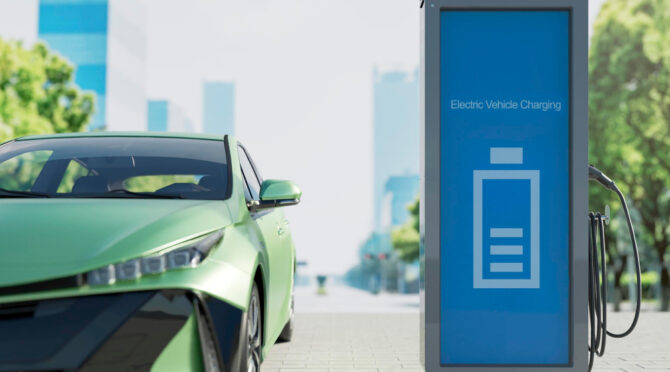
Japanese and Korean automakers, although they have fewer years of manufacturing cars than Germany, are often at the forefront of innovation, which they incorporate into their models from small city cars to large family cars. They are also first in the production of hybrid and electric vehicles. See for example the hybrid Toyota C-HR.
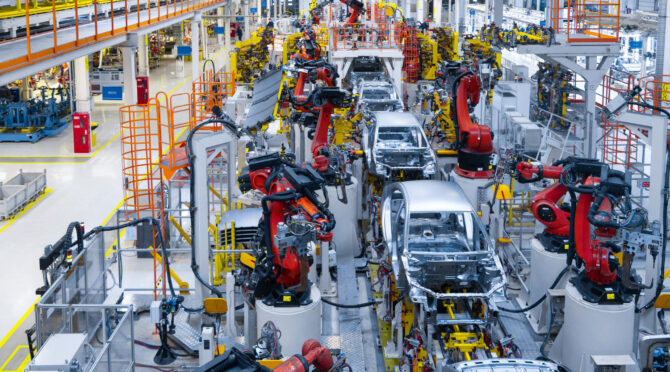
Japanese-Korean car companies place a strong emphasis on rapid production, producing vehicles at lower costs and with faster turnaround times. Their goal is to sell as many cars as they can. A typical example of a successful mass circulation model is the Toyota Yaris.
Disadvantages
Some Japanese-Korean automakers mainly produce smaller, more fuel-efficient vehicles, so they may have a limited range of vehicle models. This fact can limit the choices of consumers, especially those looking for premium vehicles with powerful engines, quick acceleration and high overall performance.
Japanese and Korean automakers tend to offer limited customization options when it comes to exterior and interior design. This can be a drawback for those who want to make their vehicle stand out from the crowd.
German car manufacturer
The Germans are famous for the robust build quality of their models. They are traditionally known for high-end luxury cars that also have the widest range in this vehicle class. Finally, they faithfully follow the doctrine power-speed-luxury. The German automaker has a strong following among consumers who value it high quality engineering and performance. Let's look at the pros and cons of the German automaker's cars.
Advantages
German automakers are known for precision engineering and attention to detail, which has led to a reputation for high-quality vehicles. They also give high priority to advanced high-quality components that constantly improve them to set new standards in the modern design of cars and their components. Who would say no to BMW X1 Or in Mercedes GLA 180d.
German cars are often associated with high performance, particularly in the luxury and sports car markets. The Germans in recent years have focused on creating a wide range of engines with considerable horsepower.
German car manufacturers often offer a wide range of customization options, allowing customers to personalize their vehicles to their personal taste.
Disadvantages
German cars are often more expensive than their competitors due to their superior features and engineering. They can also have high maintenance costs, especially for luxury models, due to the cost of parts and the complexity of their mechanics.
Despite the fact that German engineers are extremely precise in the design and production of their cars, they still break down more often than Japanese/Korean models. This is not because the German engines are poorly designed or have some defects. The "problem" lies in the fact that they are designed for high performance, which means that they are produced with the aim of the best possible performance.
While German automakers have made progress in developing electric vehicles, their range is still limited compared to Japanese/Korean competitors. OR OpenCars features the German-made hybrid model Opel Astra GS Line.
Although the German car industry is known for its engineering prowess, it has been slow to adapt to new technologies such as digitization and artificial intelligence. This contributes to the slow improvement of production efficiency and the slow improvement of the customer experience.
All car manufacturers will try even harder to create better cars, giving us all the opportunity to choose our next car from a wider range of better, more affordable and better looking models.
In conclusion, both schools make sure to offer the buying public an increasingly wide range of modern, economical and beautiful models. If you are looking for lower purchase/maintenance costs, increased functionality and greater reliability, then the Japanese/Korean companies are for you. But if luxury, speed and elegance are high on your priorities, a German model will comfortably cover your needs.
Η OpenCars has in its fleet slightly used models of the Japanese/Korean as well as the German car industry to offer you the best and most reliable choice for you.
New vehicle arrivals, useful tips and news straight to your mailbox!
Call us now
Visit us by appointment!